Signs Your Tiles Need Regrouting
Not sure whether your grout needs attention? These are the most common signs:
- Discolouration – grout has turned grey, brown or black and won’t come clean with scrubbing
- Cracking or crumbling – grout is breaking apart or falling out of the joints
- Mould growth – dark spots that keep returning despite regular cleaning
- Missing grout – visible gaps between tiles, especially in wet areas like showers
- Leaks or damp patches – moisture getting behind tiles through failed grout joints
- Old or uneven colour – grout looks patchy or inconsistent after years of wear
Any of these is a signal that regrouting will make a significant difference – both cosmetically and structurally.
Our Tile Regrouting Process
Many contractors simply apply new grout over the top of old grout. We don’t do this. Regrouting over old grout is a short-term fix – the new grout will flake, and if there is mould underneath, it will grow straight through. Our process removes the problem entirely.
The steps our team follow when regrouting floor tiles, bathrooms and showers:
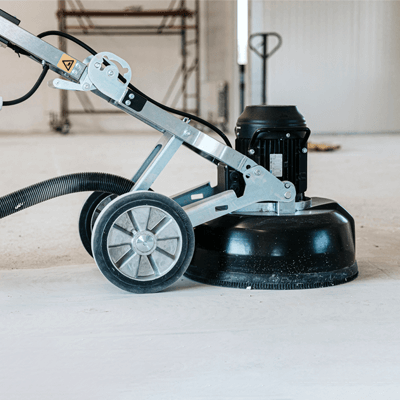
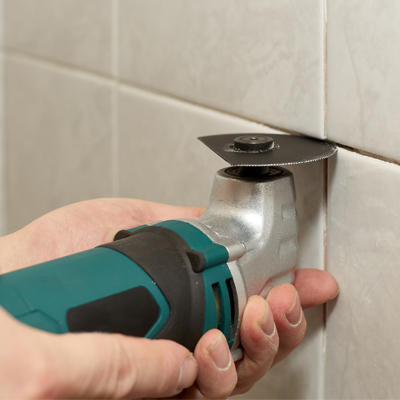
- Grind out the old grout – we use a grinder to remove all old grout from the joints, finishing by hand in tight or awkward spaces
- Clean and straighten the grout lines – joints are cleaned back so new grout bonds directly to the tile edges
- Vacuum all dust and debris – the surface is thoroughly cleaned before any new material is applied
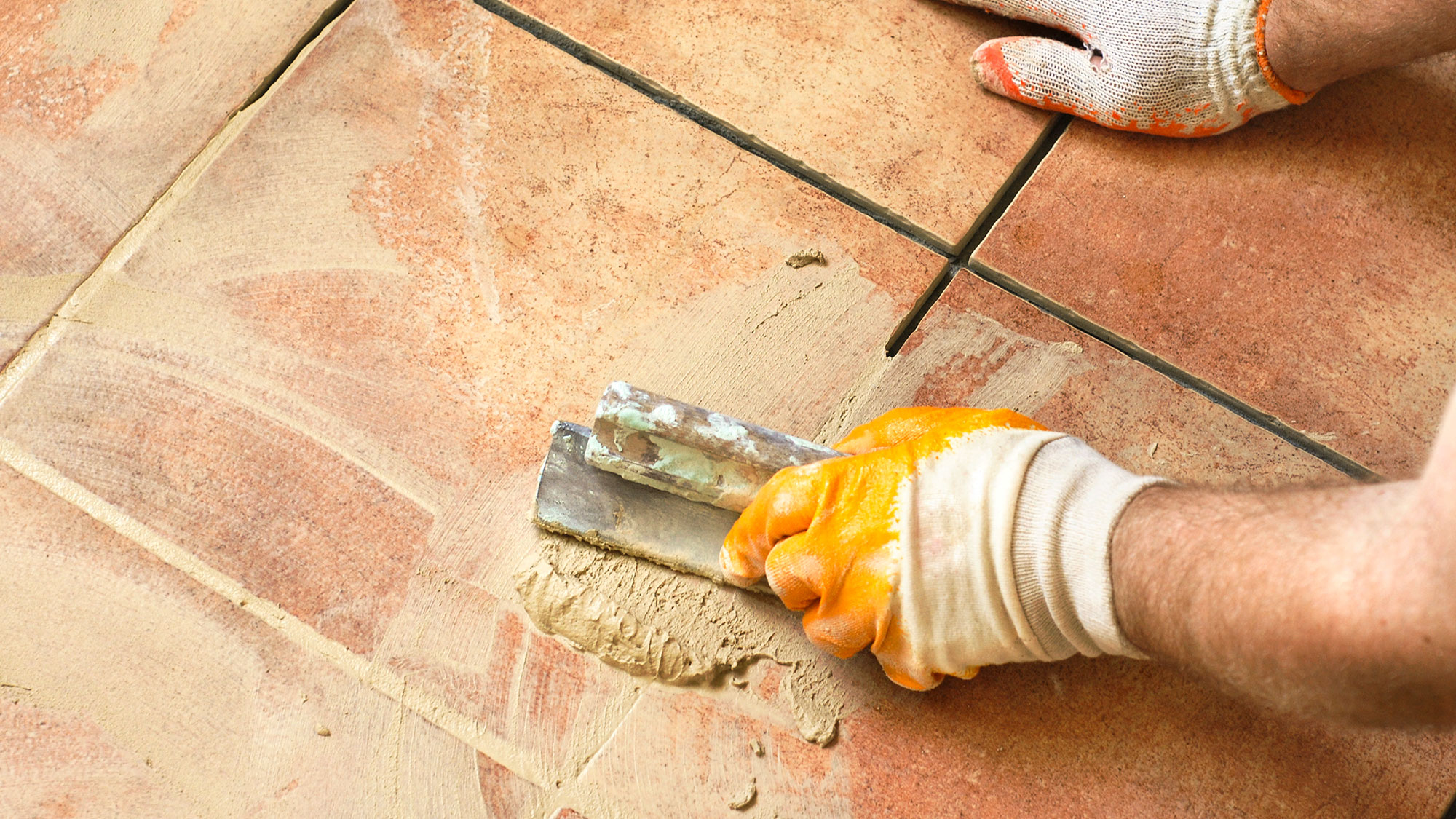
- Apply new grout – we apply fresh grout in your chosen colour and brand, working it evenly into every joint
- Clean and finish – the surface is cleaned down and inspected to ensure a neat, professional result
Once fresh grout has been applied, we strongly recommend sealing it. Sealing protects the new grout from staining and moisture ingress, significantly extending its life. We can take care of sealing as part of the same visit – see our tile sealing service.
Areas We Regrout Across Melbourne
Our team works across all tiled areas in both residential and commercial properties:
Bathroom regrouting – floors, wall tiles, vanity splashbacks and wet room walls. Bathrooms are one of the highest-moisture environments in any home, making regrouting essential for preventing water damage behind the walls.
Shower regrouting – shower floors and walls take the heaviest daily wear and are the most common source of hidden leaks. We remove failed grout in shower enclosures and apply a fresh, watertight finish.
Kitchen floor regrouting – kitchen tile grout stains easily from cooking and foot traffic. Regrouting restores a clean appearance and protects the subfloor from spills.
Outdoor paving and alfresco regrouting – external grout is exposed to sun, rain and movement. We regrout concrete pavers, natural stone and ceramic outdoor tiles across Melbourne.
Pool surround regrouting – pool areas need grout that can handle constant moisture and chemical exposure. We use appropriate grout products for wet outdoor environments.
Commercial tile regrouting – we work with businesses, strata managers and body corporates on larger-scale regrouting projects across Melbourne.
Why Regrout Instead of Retiling?
Regrouting is almost always cheaper and faster than retiling – and in most cases, the tiles themselves are in perfectly good condition. The grout is simply the weakest link.
A full bathroom retile can cost several thousand dollars and involves removing existing tiles, fixing the substrate and relaying. Regrouting the same space typically costs a fraction of that and can be completed in a single visit, with minimal disruption to your home.
If your tiles are intact and you’re happy with the look, regrouting is the smart option.
What’s the difference between Epoxy grout, Polymer based grout and Cement-based grout?
Epoxy grout uses a thermosetting epoxy resin and a hardener. Once cured, it forms a plastic-like seal that is completely stain-proof, waterproof, and chemical-resistant. It is the most durable choice for demanding environments like commercial kitchens, steam showers, and pools. However, it requires a skilled hand, as it sets extremely fast and can leave an unsightly haze on tiles if not cleaned immediately.
Polymer based grout usually refers to a cementitious grout fortified with liquid latex or acrylic polymers. The polymers fill the microscopic gaps in the cement, dramatically improving its flexibility, color consistency, and resistance to water and cracking. It bridges the gap between traditional cement and professional-grade resin.
Cement-Based Grout: This is the most traditional option. It can either be sanded (for wider joints) or unsanded (for smaller joints). It is inexpensive and easy to apply. However, because it acts like a sponge, it absorbs moisture, making it highly susceptible to mildew, mold, and discoloration unless protected by an impregnating sealer
The main differences lie in their application, maintenance, and durability:
Porosity & Staining:
Epoxy grout is non-porous, meaning liquids, grease, and stains cannot penetrate it and it never requires sealing.
Polymer grout is less porous than traditional cement grout but is still somewhat permeable and generally requires periodic sealing to avoid staining.
Cement-based grout is porous and absorbs liquid easily. It’s prone to staining from oils, wine and harsh cleaners. Needs deep cleaning and periodic resealing to avoid staining.
Application:
Epoxy grout is notoriously tricky to install; it is thick, sticky, sets very quickly (typically in 45–70 minutes), and can leave a permanent haze if not cleaned immediately.
Polymer grouts are much easier to work with, offering longer working times similar to traditional cement grout.
Cement-based grout is the easiest to work with offering the longest working times.
Durability:
Epoxy grout is much stronger (up to 7,500 psi) and highly resistant to harsh cleaning chemicals, making it ideal for commercial areas or heavy-duty environments.
Polymer grout is highly durable and flexible but cannot match the chemical and stain resistance of full epoxy.
Cement-based grout is porous and regular sealing is required. It’s also susceptible to shrinkage while curing, which can lead to stress cracks and crumbling over time. It has a lower hardness rating (around 40 on the Shore D scale), making it more vulnerable to erosion from heavy scrubbing and foot traffic.
Cost:
Epoxy grout is significantly more expensive than polymer and cement-based grouts, both in material costs and labour.

Tile Texture Transformation at Nespresso, Doncaster SC

How to Prevent Grout from Getting Dirty Too Quickly
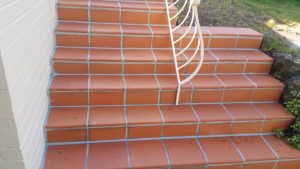
Expert Terracotta Tile Restoration in Doncaster




Blog
The Ultimate Guide to Tile Cleaning: Expert Tips for Sparkling Floors and Walls
- Oct 28, 2025
- Tile Solution Team
Learn the best tile cleaning tips and when to hire professionals in Me...
Read More
Blog
Signs Your Concrete Needs Restoration and How to Address Them
- Oct 28, 2025
- Tile Solution Team
Learn the signs that your concrete needs restoration and how our profe...
Read More
Blog
Why You Should Hire Professionals for Bluestone Tile Cleaning in Melbourne
- Oct 28, 2025
- Tile Solution Team
Here’s why professional cleaning, sealing, and maintenance are essen...
Read More
Blog
The Benefits of Large Format Tiles in Home Design
- Sep 22, 2025
- Tile Solution Team
Discover the benefits of large format tiles in home design. Create sea...
Read More